


Get our report on investing trends!
By providing your email, you will shortly receive the latest report from Pepper.
LP reporting quality has stopped being a compliance benchmark and started being a fundraising variable — and the managers who do not understand the difference are entering re-up conversations with a structural disadvantage they have not yet recognised.


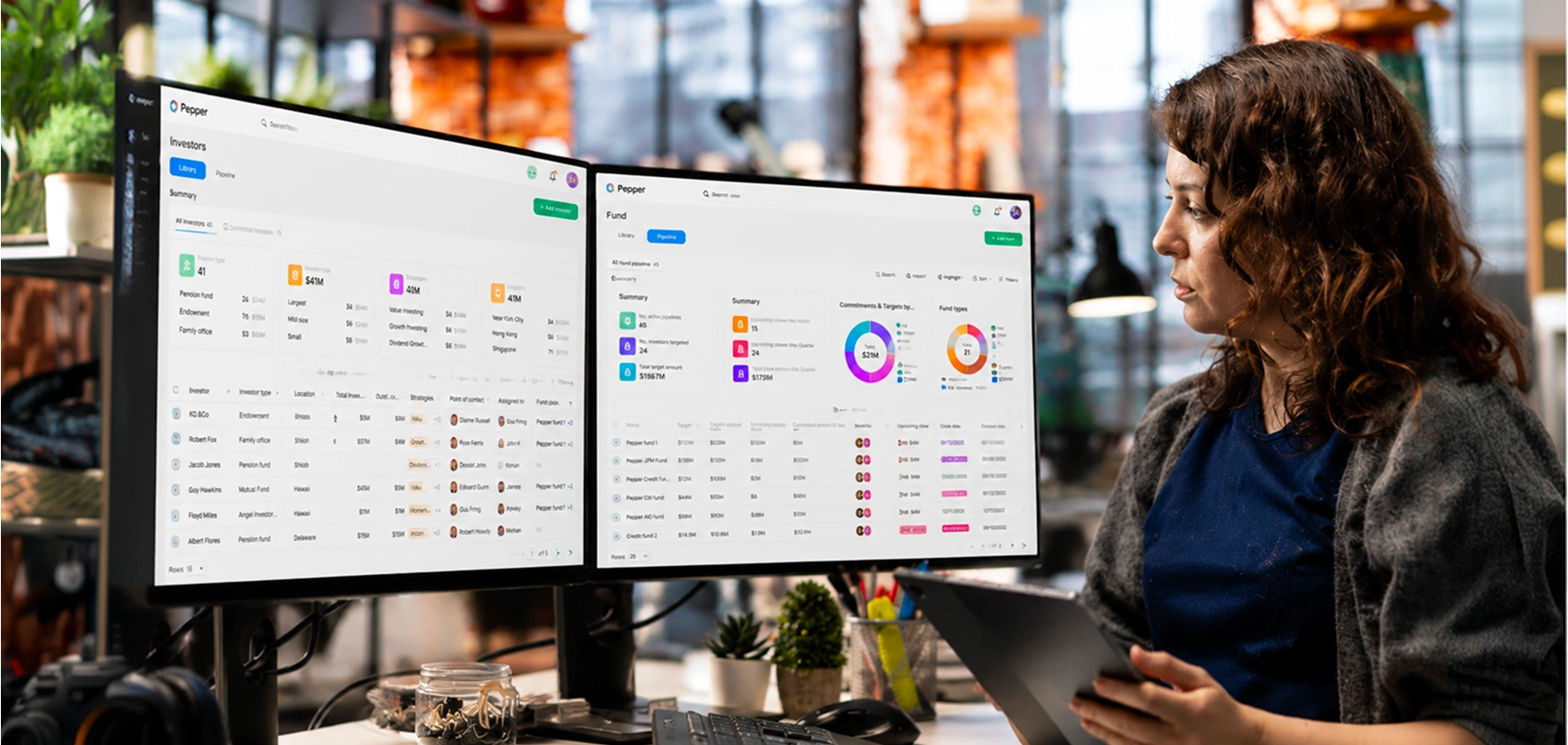
This distinction matters because it determines what kind of solution the problem requires. If LP reporting quality is an IR problem — a matter of formatting, frequency, and communication style — then the solution is better IR staff, better templates, and better communication discipline. If LP reporting quality is an investment quality signal — a visible indicator of the data infrastructure underlying the fund’s investment decisions — then the solution is the same infrastructure that makes better investment decisions possible.
Institutional LPs have arrived at the second understanding. Not through formal analysis, but through experience. The private credit and alternative asset managers whose quarterly reports arrive in 10 to 14 days with granular borrower-level data, consistent numbers across all sections, and a narrative that matches the underlying data — those managers also tend to have cleaner portfolio company tracking, earlier detection of credit problems, fewer LP reporting restatements, and better audit outcomes. The reporting quality and the investment management quality are not separate signals. They are the same signal, coming from the same data infrastructure.
The evolution is visible in how major institutional allocators — pension funds, sovereign wealth funds, endowments, insurance company investment arms — have built out their operational due diligence (ODD) functions over the past five years. ODD teams at major institutional investors now conduct systematic reviews of GP operational processes as a standard part of new manager evaluation and re-up assessment.
The specific questions ODD teams are asking about LP reporting have become more precise and technically sophisticated. Not “can you produce a quarterly report?” but: What is the source of the data in the quarterly LP report? How many systems does it pass through between origination and distribution? What is the reconciliation process when the fund administrator’s numbers differ from your portfolio monitoring data? What is the QA workflow before distribution? What has the delivery timeline been over the past eight quarters?
These questions distinguish managers who have built systematic private credit reporting infrastructure from managers who are manually assembling reports each quarter. A growing proportion of institutional LPs are asking them before making new commitments — and before approving re-ups in existing funds.
45 days typical LP report delivery on a manual assembly process from multiple data sources
10–14 days delivery timeline achievable on a unified data model with AI narrative generation
Re-up decisions at the margin. Private credit and alternative asset managers raising their third or fourth fund are competing against each other for re-ups from LPs who have had three to five years of experience with their reporting quality. LPs managing 30 to 50 private credit manager relationships evaluate re-up decisions in part based on operational quality. The manager whose quarterly LP reports are consistently accurate, timely, and granular is easier to re-up with than the manager with comparable investment returns and inconsistent, delayed reporting. At the margin, where comparable investment performance makes the operational dimension more determinative, reporting quality influences capital allocation decisions.
The LP portal as a condition of commitment. An increasing number of institutional LPs are asking for real-time LP portal access — the ability to pull capital account data, performance metrics, exposure analysis, and ESG metrics on demand rather than waiting for the quarterly PDF report. This expectation is moving from “preferred” to “required for serious consideration” in the institutional LP market. Providing LP portal access with meaningful, live data requires a continuously updated portfolio data model. It cannot be bolted onto a manual quarterly reporting process. The managers who offer it as a standard feature of their investor relations package are differentiating from those who cannot.
The ODD presentation moment. When a private credit or alternative asset manager enters the final stages of a fund raise, LP operational due diligence teams frequently ask for a live demonstration of the reporting and monitoring systems. The managers who open an LP portal in the meeting, show real-time portfolio data, and walk the ODD team through the monitoring process are presenting an operational story that managers with a PDF-from-Excel process cannot match — regardless of how strong their investment track record is.
The LP who asks “what is the source of the data in your quarterly report?” is asking the same question as “how reliable is your investment decision-making?” The data infrastructure that supports LP reporting is the same infrastructure that supports portfolio monitoring, covenant testing, and valuation. LPs who understand this — and the most sophisticated institutional LPs do — are reading both questions in the answer to one.
AI is changing the economics of institutional-grade private credit LP reporting in one specific way: it makes the standard accessible to mid-market managers who could not previously justify the headcount required to maintain it. The most labour-intensive component of LP report production is the quarterly narrative — portfolio commentary, credit-by-credit performance notes, market context, forward-looking statements. For a manager with 60 LP relationships, each requiring customised narrative content, the drafting burden consumes weeks of senior professional time each quarter.
AI narrative generation, operating on structured portfolio data, produces first-draft narratives for each LP’s quarterly report from the same structured data that populates the quantitative tables. The IR team reviews, personalises for LP-specific relationship context, and approves. The drafting burden shifts from writing to editing — a materially different and more efficient use of senior professional time.
What AI does not change: the relationship context, the investor-specific framing, the judgment about how to characterise a difficult quarter, the tone calibrated to the specific history with a particular LP. These remain human capabilities. AI produces the structured starting point. The IR professional makes it a communication that reflects the relationship.
Pepper generates LP reports directly from the live portfolio data model — no export step between data and report, no manual reconciliation between the fund administrator’s records and the portfolio monitoring data. AI narrative generation produces first-draft quarterly narratives from structured portfolio data. LP portal access provides real-time capital account information, performance data, and exposure analysis on demand. The quarter-end reporting cycle begins the moment the last quarterly financial statement is processed — not the moment someone begins manually assembling data from three different systems.
Articles
August 20, 2026

Articles
August 20, 2026

Articles
August 20, 2026
Sign up for our newsletter to receive biweekly updates on the world of asset management, delivered straight to your inbox.

By providing your email, you will shortly receive the latest report from Pepper.
In a 45-minute session, we'll walk you through how Pepper handles the workflows your team runs today — deal management, portfolio monitoring, fund operations, or LP reporting. You pick the priority.
Not a sales call. A 30-minute conversation with a Pepper practitioner about where your operation is today, where the pressure points are, and whether a platform approach makes sense for your stage of growth.