


Get our report on investing trends!
By providing your email, you will shortly receive the latest report from Pepper.
Operational infrastructure quality is no longer a secondary consideration in private equity fund due diligence — it is a primary evaluation criterion, and the firms that cannot demonstrate institutional-grade data management and portfolio monitoring are losing fund closes to firms that can.


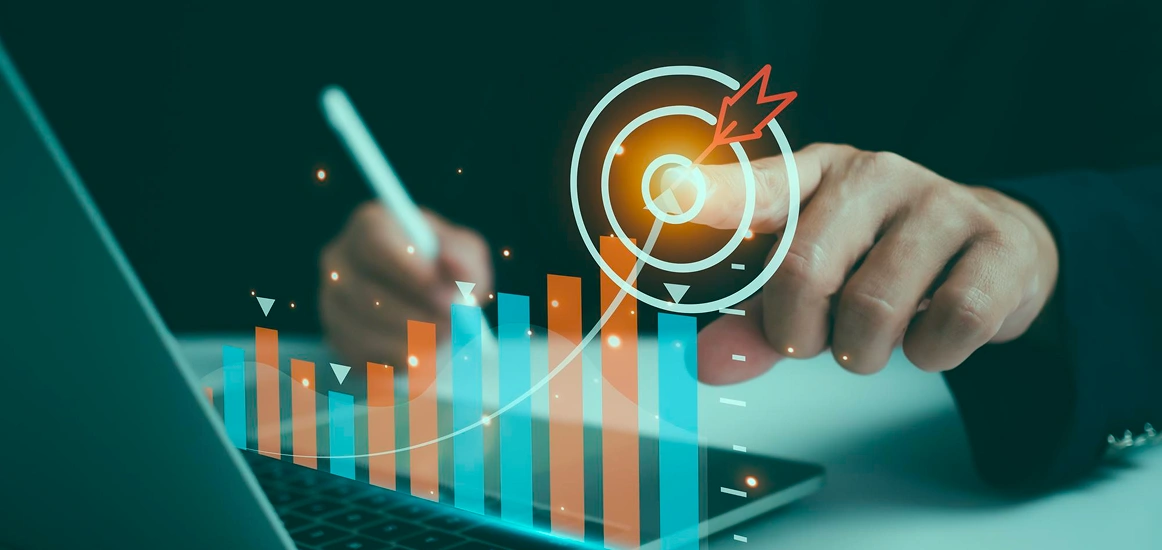
The operational due diligence questions that private equity GPs are encountering in fund close processes in 2026 are more specific, more technically sophisticated, and more directly connected to investment management quality than the ODD questions of five years ago.
How is portfolio company financial data collected, at what frequency, and at what latency from the portfolio company to the investment team? This question distinguishes firms that receive and process portfolio company financial data continuously — monthly management accounts, weekly flash reports, operational KPIs — from firms that wait for the quarterly board presentation. The answer reveals the monitoring architecture, not just the monitoring intention.
What oversight structure governs the valuation determination, and can you document who reviewed marks in Q4 last year and what action they took? This question surfaces whether valuation governance is documented and independent or implicit and internal. The request for specific historical documentation — not a description of the process, but evidence that the process ran — is the question that separates firms with embedded governance from firms with described governance.
What is the source of the data in your LP reports, how many systems does it pass through between origination and distribution, and what is your historical delivery timeline? This question surfaces fragmented data architecture immediately. A firm whose LP reports draw from a unified, governed data model answers it simply and quickly. A firm whose reports require manual reconciliation between the fund administrator, the portfolio monitoring system, and the reporting template takes time to answer — and the time it takes is itself revealing.
Which specific operational workflows have been augmented with AI, what data does the AI operate on, and how are AI outputs validated before they inform investment decisions? This question distinguishes firms that have integrated AI in substance — on a governed data foundation, with documented validation processes — from firms that have adopted AI in form, on a fragmented data stack, with the minimal use that Allvue’s 2025 research documents for 58% of firms that have adopted AI.
The LP ODD team asking “what data does your AI operate on?” is asking the same question as “is your data governed well enough to trust the outputs?” The answer to one is the answer to the other.
The investment case for private equity data infrastructure is often framed as a cost argument — better systems reduce headcount requirements, reduce reconciliation time, reduce operating costs. This frame understates the total value. The more compelling case is an alpha argument.
Earlier problem identification. AI-powered continuous portfolio company monitoring that detects margin compression, working capital deterioration, and revenue underperformance before they escalate provides intervention options that disappear once a problem has compounded for two quarters. A portfolio company problem identified at 90 days versus at the board meeting is a fundamentally different operational situation. The value of the earlier identification is measured in avoided restructuring costs, preserved management relationships, and exit multiple protection.
Faster deal execution. AI-powered document intelligence that processes CIMs in hours rather than days, and comparable transaction surfacing that generates documented pricing reference sets rather than relying on individual memory, compresses the data processing phase of deal evaluation without reducing analytical quality. In a market where the time from teaser receipt to LOI is often 10 to 14 days, this compression is a competitive differentiator.
Better LP relationships at re-up. LP portal access with live portfolio data, AI-assisted narrative reporting, and consistent delivery timelines reduce LP management overhead and improve the quality of LP relationships at re-up. The marginal LP commitment in a fund close often goes to the manager who demonstrates the most credible operational infrastructure — not just the strongest investment track record.
The private equity managers winning fund closes in 2026 can demonstrate their operational capabilities — not describe them. Open the LP portal in the ODD meeting. Walk through the portfolio monitoring process with live data from actual portfolio companies. Show how AI outputs are validated before they inform investment decisions. Explain the data foundation the AI operates on and why it produces trustworthy outputs.
The firms that have built this infrastructure before the fund close are the firms that can do this. The firms that have not are entering the ODD conversation with a disadvantage that their investment track record may not fully overcome. Operational infrastructure quality is now visible in due diligence — and institutional LPs are starting to price it.
Pepper integrates deal management, portfolio monitoring, valuation, and LP reporting on a single governed data layer. AI capabilities — financial deterioration detection, portfolio stress testing, LP report narrative generation, document intelligence, IC memo drafting — are demonstrable, auditable, and grounded in the structured investment data the investment team manages in the platform. The ODD conversation about AI does not require a vendor pitch. It requires showing how the platform works.
Articles
August 20, 2026

Articles
August 20, 2026
Articles
August 20, 2026
Sign up for our newsletter to receive biweekly updates on the world of asset management, delivered straight to your inbox.

By providing your email, you will shortly receive the latest report from Pepper.
In a 45-minute session, we'll walk you through how Pepper handles the workflows your team runs today — deal management, portfolio monitoring, fund operations, or LP reporting. You pick the priority.
Not a sales call. A 30-minute conversation with a Pepper practitioner about where your operation is today, where the pressure points are, and whether a platform approach makes sense for your stage of growth.