


Get our report on investing trends!
By providing your email, you will shortly receive the latest report from Pepper.
Institutional LPs are applying AI to their own private markets portfolio analytics — and to do so, they need clean, structured data from their PE GPs, not PDF reports that require manual extraction before any analysis can begin.


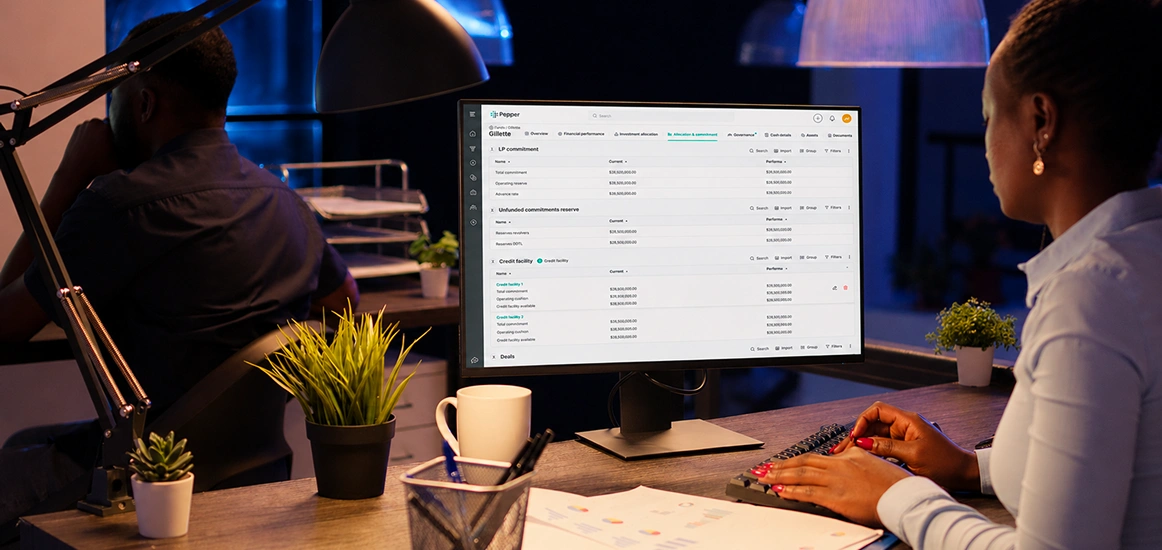
The LP reporting expectations for private equity funds have historically been more permissive than for private credit or hedge funds. The illiquid nature of PE investments meant that quarterly data had limited actionability for most LPs. The information asymmetry between GP and LP was accepted as a structural feature of the PE model. LPs provided capital, received periodic reports, and relied on the GP’s judgment about portfolio company performance.
That acceptance is eroding rapidly — and the force driving the erosion is not LP preference but LP capability. Institutional LPs who have built sophisticated private markets analytics infrastructure of their own are discovering that GP PDF reports are not compatible with their analytical tools. The LPs who are most actively pushing for structured data access, LP portal transparency, and ILPA-aligned data delivery are the LPs with the most sophisticated portfolio analytics teams — and those tend to be the largest and most reliable institutional allocators in private equity.
Private markets allocation consolidation and the machine-readable data requirement. Institutional investors with significant private equity allocations — spanning 20 to 50 GP relationships, representing hundreds of underlying portfolio companies — cannot manage their private equity portfolio risk from individual GP quarterly PDF reports. They need to aggregate financial data, ESG data, and performance attribution data across their full PE portfolio. Their portfolio management infrastructure is designed to process structured data. GPs who provide PDFs are providing data in a format that requires manual extraction before it can enter the LP’s analytics workflow — which creates friction, delay, and error risk at the LP’s end. The LPs who are making the structured data request most explicitly are the ones building the most sophisticated private markets analytics infrastructure.
ESG regulatory requirements and company-level data specificity. European institutional investors subject to SFDR, US investors navigating SEC ESG disclosure requirements, and institutional LPs with their own ESG investment policy commitments need company-level ESG data from their PE portfolio companies — not generic fund-level ESG narratives. For a PE GP with 30 portfolio companies at different ESG reporting maturity levels, providing company-level ESG data mapped to each LP’s specific mandate framework requires systematic data collection, normalisation, and LP-specific mapping. Manual annual ESG surveys cannot produce the consistency, specificity, or timeliness that these requirements demand.
AI-powered LP portfolio analytics and the structured data prerequisite. Institutional LPs are beginning to apply AI to their private equity portfolio analysis — concentration and correlation risk modelling across the full alternatives portfolio, vintage attribution analysis, scenario analysis on their PE allocations. To use these AI tools effectively, they need clean, structured data from their GPs. The quality of the LP’s AI portfolio analytics output is constrained by the quality of the GP data that feeds it. GPs who provide structured data access enable better LP analytics. GPs who provide only PDFs become a bottleneck in the LP’s analytical workflow. The LPs doing the most sophisticated portfolio analytics are, in practice, the ones most actively requesting structured data delivery.
The reporting capabilities that are moving from “preferred” to “required for serious institutional consideration” in PE fund due diligence in 2026:
AI contributes to PE LP reporting in the same ways it contributes across other strategies — narrative generation, anomaly detection, portal data delivery. The distinctive private equity application is ESG data collection and normalisation across a heterogeneous portfolio company base.
A PE GP with 30 portfolio companies at different ESG reporting maturity levels receives ESG disclosures in as many different formats as there are portfolio companies — some structured and comprehensive, some narrative and incomplete, some absent entirely. Normalising these inputs into a consistent, LP-mandate-mappable framework through manual survey processes is operationally intensive, produces inconsistent data quality, and typically runs on an annual rather than quarterly cadence.
AI-powered ESG data normalisation processes heterogeneous ESG disclosures — structured reports where they exist, AI extraction from narrative disclosures where they do not — and produces consistent, validated, LP-mandate-mappable ESG data at whatever frequency the reporting cadence requires. For a PE GP with 30 portfolio companies, this is the difference between an ESG reporting program that satisfies institutional LP requirements credibly and one that produces an annual narrative disclosure that sophisticated LPs recognise as inadequate.
Building the LP reporting infrastructure that institutional PE LPs now expect is not primarily a reporting investment. It is an investment in operational maturity that LP reporting is the most visible output of. The data model that produces ILPA-aligned structured data delivery is the same data model that enables better portfolio company monitoring and more reliable valuation governance. The ESG data collection infrastructure also enables better portfolio company ESG management. The LP portal that provides real-time capital account access draws from the same live data model as the investment team’s portfolio monitoring dashboard.
GPs who build this infrastructure before their next fund close enter the LP due diligence process with demonstrable operational maturity — the ability to show the LP portal in the meeting, provide a structured data sample on request, and explain the ESG data collection and normalisation process with specific examples. Those who do not are entering the same process with a narrative description of what they intend to build. In an institutional LP market where the most sophisticated allocators are evaluating GP operational infrastructure as rigorously as investment strategy, the difference between “demonstrable” and “described” is the difference between a competitive fundraising position and a disadvantaged one.
Pepper’s LP reporting infrastructure for private equity covers ILPA-aligned structured data delivery, portfolio company-level financial and operational data, ESG data normalisation and LP-mandate mapping, vintage-attributed performance reporting, and real-time LP portal access. AI narrative generation, anomaly detection, and structured data export draw from the same governed data layer as deal management and portfolio monitoring. The LP reporting capability reflects the quality of the data infrastructure beneath it — and Pepper was designed to make that infrastructure institutional-grade from the beginning.

Articles
August 20, 2026

Articles
August 20, 2026

Articles
August 20, 2026
Sign up for our newsletter to receive biweekly updates on the world of asset management, delivered straight to your inbox.

By providing your email, you will shortly receive the latest report from Pepper.
In a 45-minute session, we'll walk you through how Pepper handles the workflows your team runs today — deal management, portfolio monitoring, fund operations, or LP reporting. You pick the priority.
Not a sales call. A 30-minute conversation with a Pepper practitioner about where your operation is today, where the pressure points are, and whether a platform approach makes sense for your stage of growth.